
How to Recognize a High-End Tie?
In the masculine wardrobe, few accessories combine tradition and modernity with such precision. The tie, far from being a simple ornament, reveals the man who wears it. But between an authentic high-end tie and its imitation, how do you tell the difference? The secrets lie in the details.
Why Recognizing a High-End Tie Is Essential
Choosing a tie is a bit like choosing a wine. You can settle for the first one that comes along, or learn to recognize what makes excellence. A luxury men's tie doesn't just dress you up: it tells a story, that of preserved craftsmanship and timeless elegance.
The investment in an exceptional tie makes complete sense when you realize it will accompany you for decades. Where an ordinary tie gives up after a few knots, a quality piece crosses the years with the same presence as on day one. It's this durability that transforms a purchase into an investment, and an accessory into a lifelong companion.
At Thuillier Paris, we have been perpetuating the art of fine ties since 1930. This experience has taught us that excellence can be read in a multitude of details, often invisible at first glance. Let's discover together these telltale signs that never lie.
The Material: Queen of Criteria
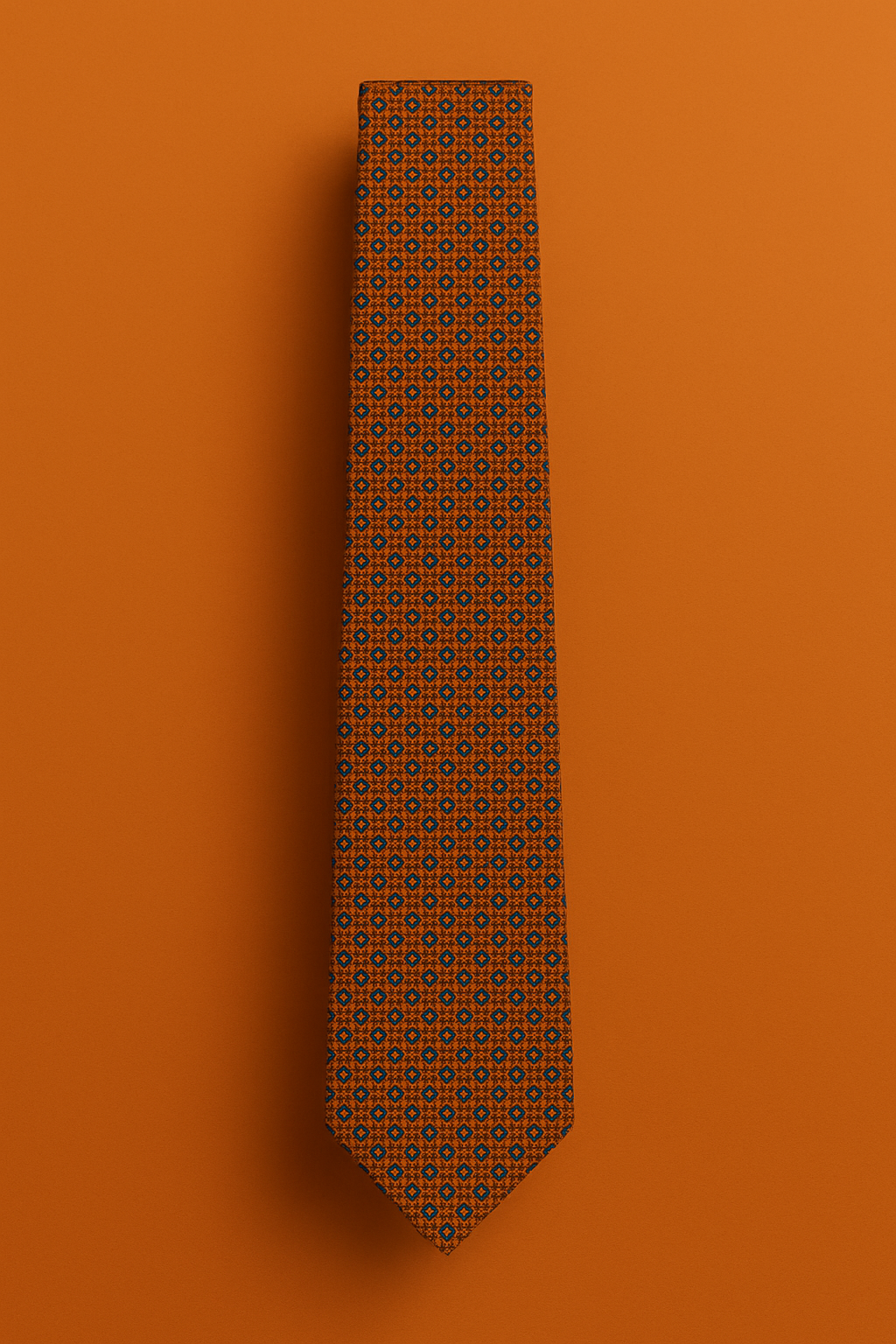
Everything begins with touch. Close your eyes and let your fingers glide over the fabric. A luxury silk tie provides an immediate sensation, that of a caress rather than mere contact. Natural silk possesses that incomparable softness, that fluidity that makes you never tire of wearing it.
But beware, not all silks are created equal. The finest come from the Italian mills of Como or the Lyon workshops, heirs to a centuries-old tradition. These exceptional silks are recognized by their subtle shine—never garish, always elegant. They capture light without monopolizing it, creating shifting reflections that animate the tie with your every movement.
Beyond classic silk, certain materials immediately signal high-end quality. The grenadine silk tie, that airy weave born in Italy, offers a unique texture and exceptional drape. Connoisseurs recognize it at first glance. Virgin wool, perfect for winter months, brings depth and character. As for the mythical Sea Island cotton, cultivated in the Caribbean, its rarity is matched only by its softness.
The insider's trick? The wrinkle test. Gently squeeze the tie in your fist for a few seconds. A quality material instantly regains its original shape, without retaining the slightest trace. That's the magic of premium natural fibers.
The Construction of a High-End Tie
If the material is the soul of the tie, its construction is the skeleton. And this is where true artisanal craftsmanship truly reveals itself. Tradition distinguishes three types of construction, each telling a different story.
The three-fold tie, often fused, belongs to the world of industrial production. Let's move on. The 5-fold tie already represents a superior level: the silk is folded five times upon itself, creating a structure that is both solid and supple. It's the standard of fine houses, the one that guarantees perfect hold without excessive rigidity.
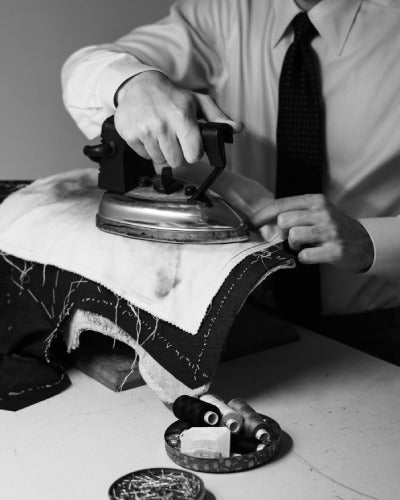
But let's talk about the seven-fold tie, this marvel of ingenuity. Imagine a 90-centimeter square of silk, folded seven times without any added lining. The result? A tie of incomparable softness, which naturally follows movements and never wrinkles. At Thuillier Paris, each seven-fold tie requires nearly an hour of meticulous work. The result is well worth this patience: what a pleasure to wear.
The stitching also tells its story. On the reverse of a high-end tie, observe that small thread holding the two panels together. If it forms irregular, slightly spaced stitches, you hold in your hands the work of a craftsman. The machine produces stitches of monotonous regularity. This human imperfection, paradoxically, signs the perfection of handwork.
The interlining also deserves your attention. This interior lining, invisible but essential, gives body to the tie. The best use wool or a clever blend of wool and horsehair. Why horsehair? Because it possesses that natural elasticity that allows the tie to regain its shape after each use. A detail that only true connoisseurs appreciate.
The Finish: Where Excellence Lies
Finishes separate the wheat from the chaff. Take the bar tack, that small reinforcement stitch at the tip of the tie. On an ordinary piece, it's a simple machine stitch. On an exceptional tie, it's a signature, made by hand with watchmaker's precision. At Thuillier Paris, this technique is passed down from generation to generation, each artisan adding their personal touch.
The label, glued on a low-end tie, is sewn at all four corners on a quality piece. But look more closely: are the stitches regular? Is the alignment perfect? These details may seem insignificant, but they reveal the care taken at each stage of manufacturing.
The overall balance of the tie constitutes another revealing indicator. Hold it by the middle and observe how it falls. A luxury men's tie hangs naturally, without twisting or leaning to one side. Its tips are perfectly symmetrical, its width constant along its entire length. This harmony is not due to chance: it results from precise cutting and meticulous assembly.
The Drape and Knotting: The Test of Truth
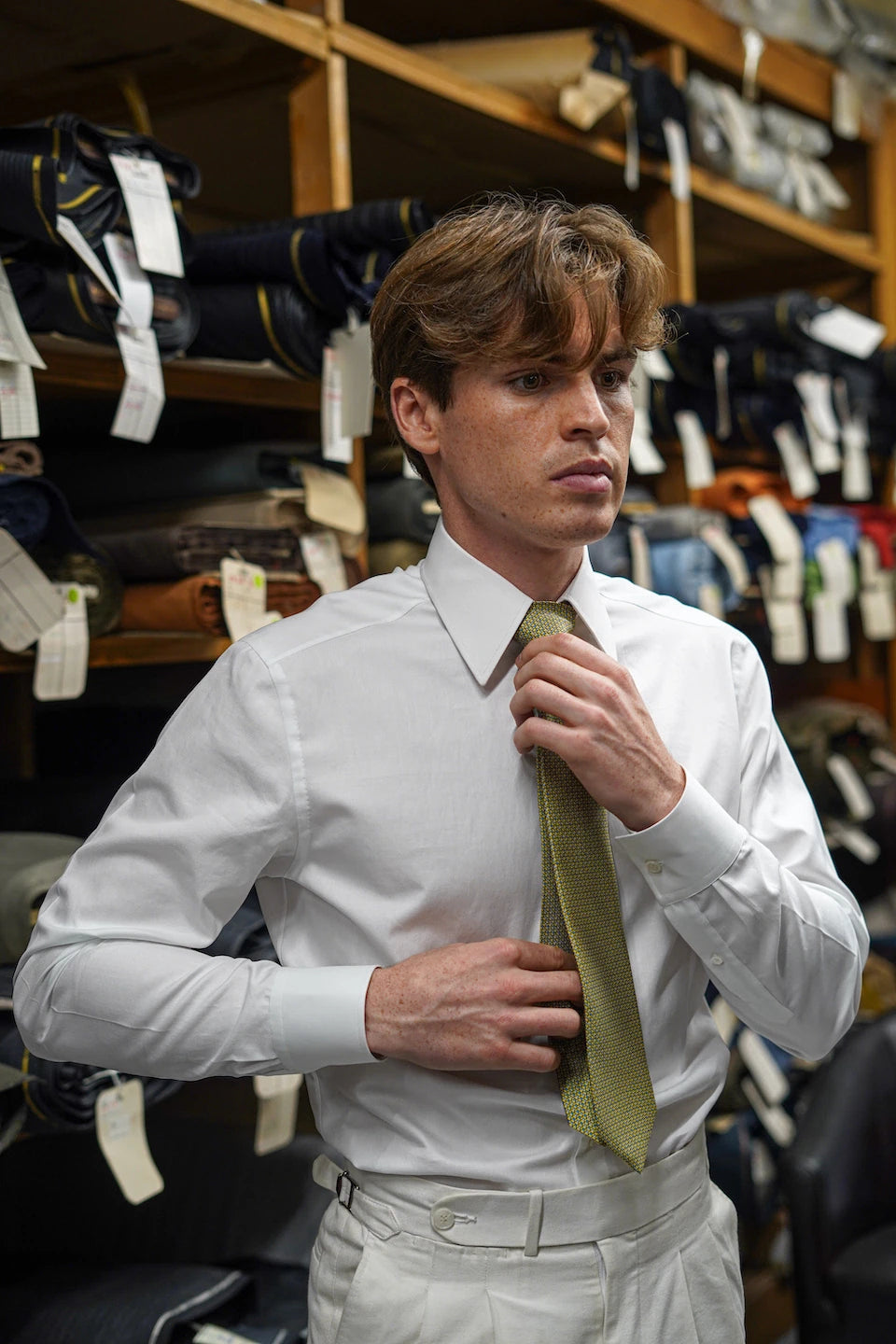
The true test of a tie reveals itself at the moment of knotting. An exceptional tie folds with disconcerting ease, naturally forming that little dimple under the knot that Italians call "dimple." It glides between your fingers without resistance, gracefully following each movement.
The famous "flag test" remains the ultimate trial. Knot your tie normally, then gently pull on the narrow end. A luxury silk tie unties smoothly, without catching or resistance. Even more impressive: it retains no trace of the knot. Hang it for a few hours, and it returns to its original shape, as if it had never been worn.
This shape memory is not a miracle, but the result of thoughtful construction and premium materials. A tie that remains wrinkled after use immediately betrays its modest origins. Conversely, a high-end piece can be worn day after day without showing the slightest sign of fatigue.
The Origin and Manufacturing of High-End Ties
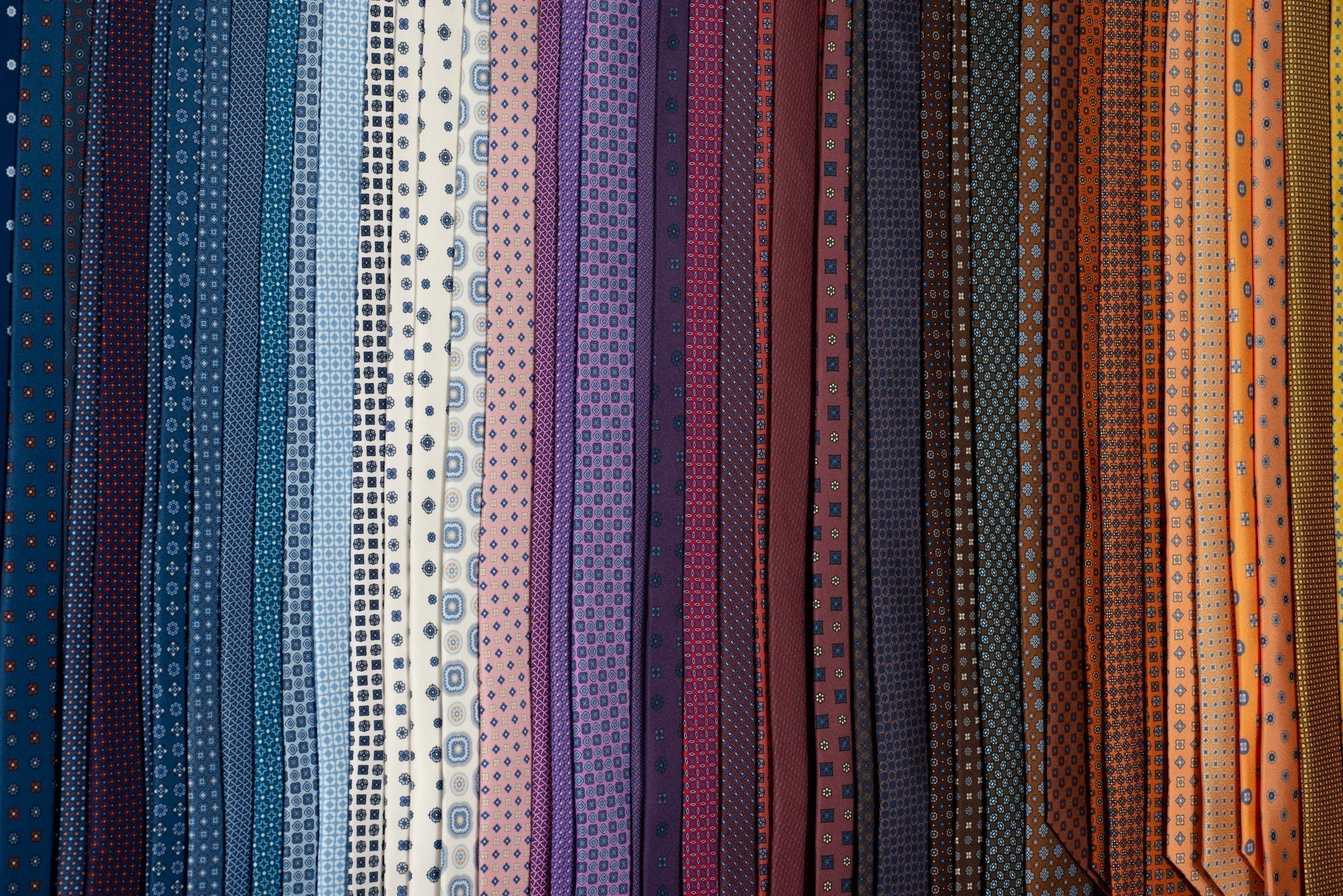
Behind every great tie lies a geography of craftsmanship. France, the historical cradle of the modern tie, excels in the art of cutting and assembly. Italy reigns over silk printing, with patterns of incomparable richness. England perpetuates the tradition of club ties with diagonal stripes, symbols of belonging and British elegance.
But beyond geographical origin, it's the manufacturing method that makes the difference. A true artisanal tie requires patience and expertise. In our Parisian workshops, each piece passes through the expert hands of artisans who perpetuate centuries-old gestures. A minimum of forty-five minutes per tie, fifteen distinct steps, and the vigilant eye of the master tie-maker who watches over every detail.
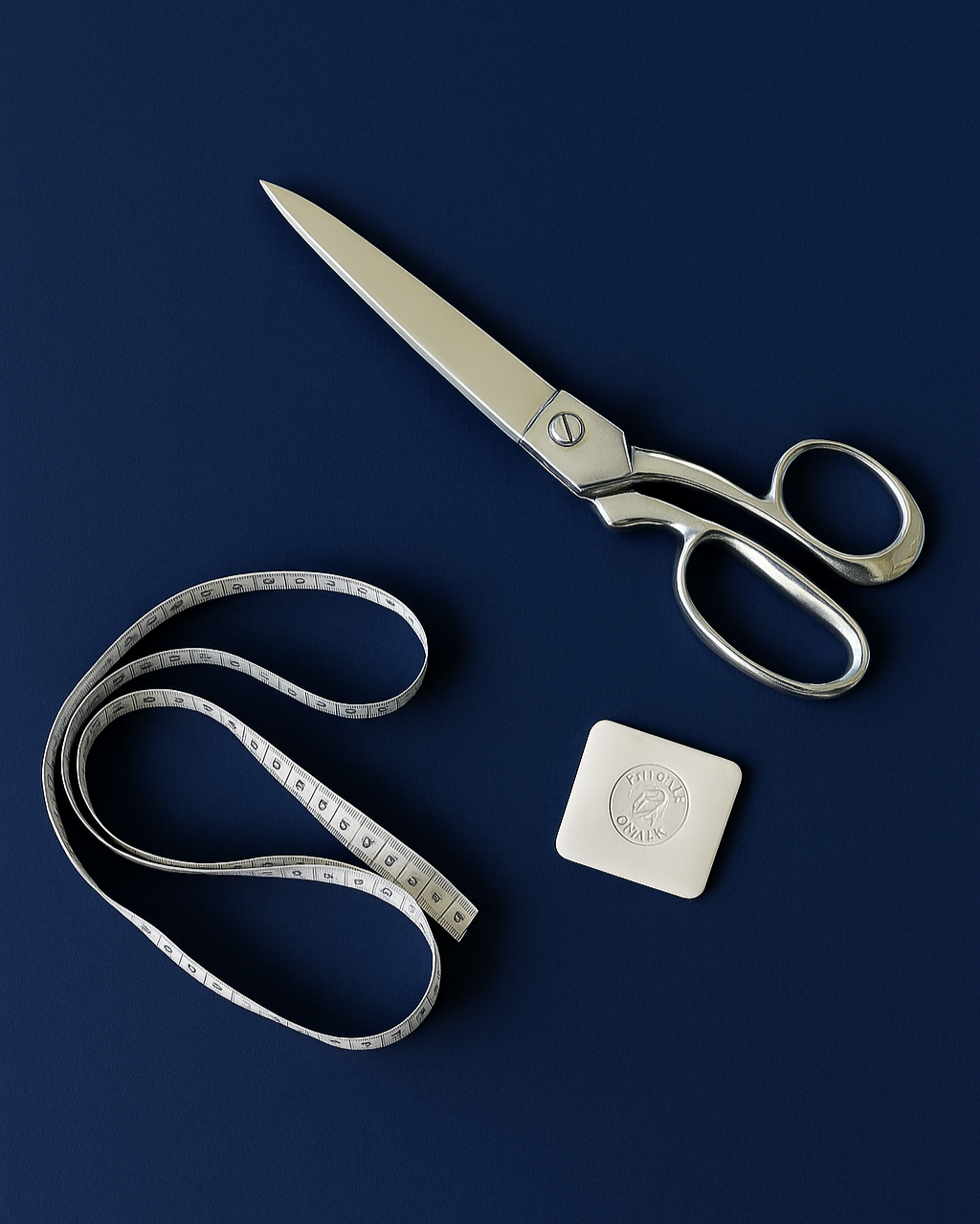
Tailoring expertise cannot be improvised. It is transmitted, refined, perfected over generations. The secrets of cutting, assembly techniques, tricks for obtaining that perfect drape—so much knowledge that makes the difference between a tie and a wearable work of art. At Thuillier Paris, some of our artisans have been working for over thirty years. Their expertise is evident in every fold, every seam, every finish.
Traceability completes the picture. A serious house knows: where the silk comes from, who wove it, in which workshop it was made. This transparency is not just a marketing matter—it testifies to legitimate pride and a commitment to excellence.
The Investment That Transcends Trends
Buying a high-end tie may seem extravagant in a world where fast fashion reigns. Yet, do the math. A quality tie will accompany you for ten, fifteen, even twenty years. Divide its price by the number of uses, and you'll discover it costs less than that accumulation of mediocre ties that invariably end up at the back of the closet.
More than an economic calculation, it's a philosophy. Owning a few beautiful pieces rather than a multitude of soulless accessories. Whether it's a navy suit tie for the office or a grenadine for grand occasions, knowing the history of the tie you wear becomes essential. Appreciating the artisan's work each time you knot your tie. That is true luxury.
The Art of Recognizing Excellence
Recognizing a high-end tie requires attention, a bit of experience, and above all curiosity. The clues are there, in the caress of silk, the precision of a seam, the balance of construction. Each detail tells part of the story.
At Thuillier Paris, we have been writing this story since 1930. Our ties have accompanied presidents and captains of industry, but also all those who understand that a beautiful tie is not a superfluous luxury—it's the expression of a certain French art of living.
Our luxury silk ties, crafted in our Parisian workshops, embody this perpetual quest for excellence. Each piece carries within it a century of know-how, passion, and exacting standards. Because a Thuillier Paris tie is not simply worn. It is lived, passed down, and tells those who know how to read it the story of an elegance that transcends time.
Discover the Thuillier Paris universe or explore our collections online. Excellence awaits you.